
Mood Geometry
role
UX Design
Client
Personal project
year
2026
Overview
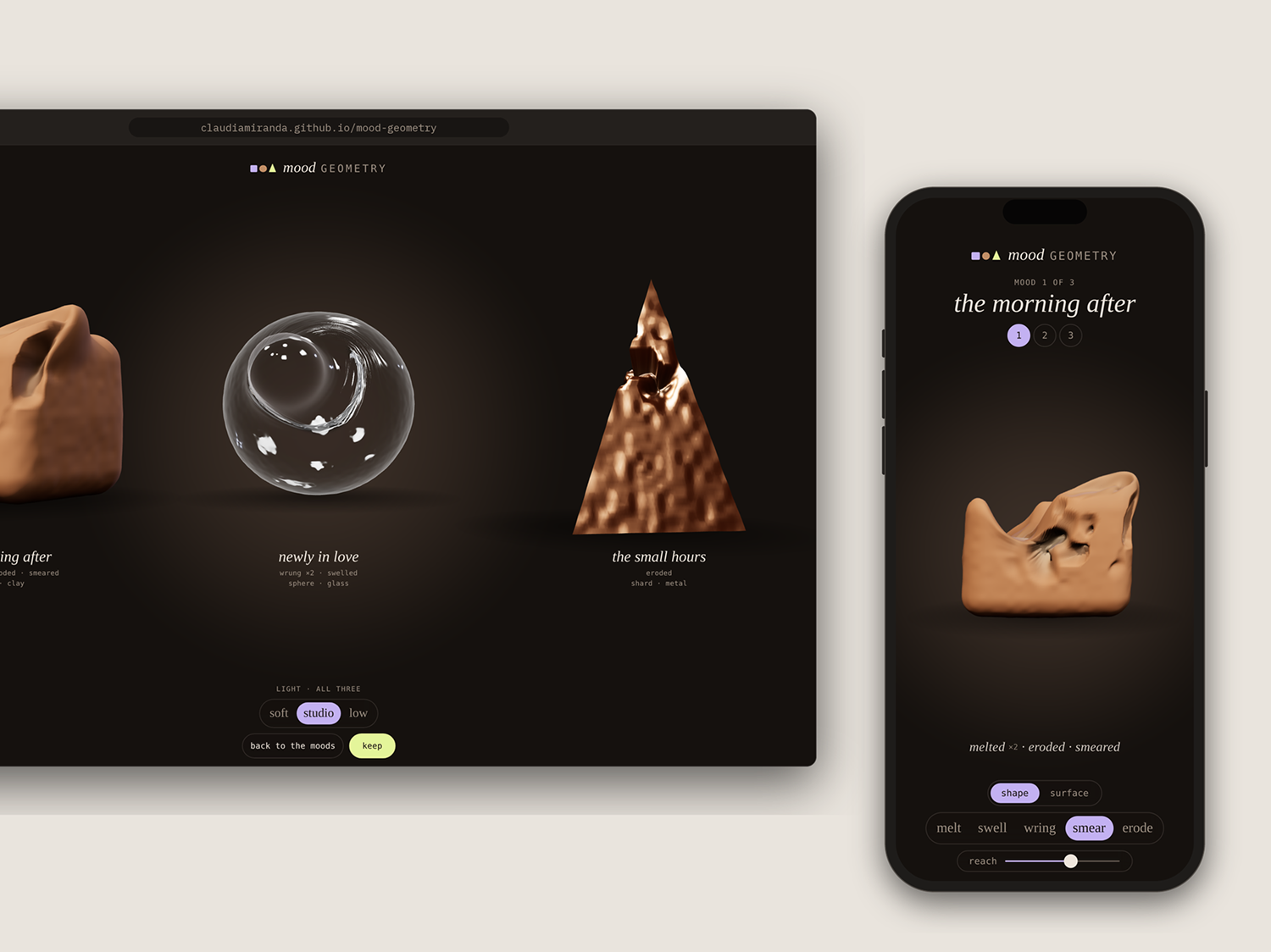
mood geometry is a solitary web app for giving a feeling a shape. You're dealt three moods, choose a simple form for each, and distort it until it feels right. The three end up side by side as a triptych, a small record of where you were.
It runs in the phone or desktop browser, with nothing to install and no account. Try it here →
Where it comes from
The app grew out of an étude in Cosmic Things, a course I teach on objects, worlds and making. Students sculpted an object for a mood, then reshaped it for another. The exercise worked on paper and in clay, and I wanted a version people could do alone, in a few minutes, on the device already in their hand.
Like much of my personal creative work, it distorts in order to clarify.
The flow
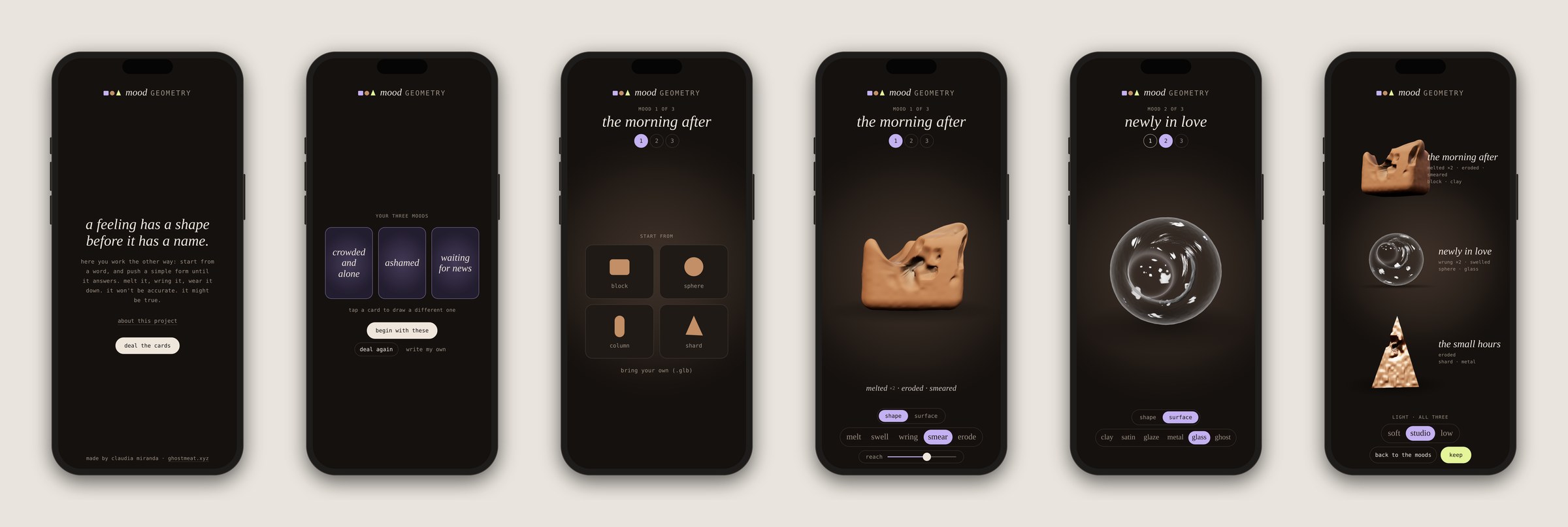
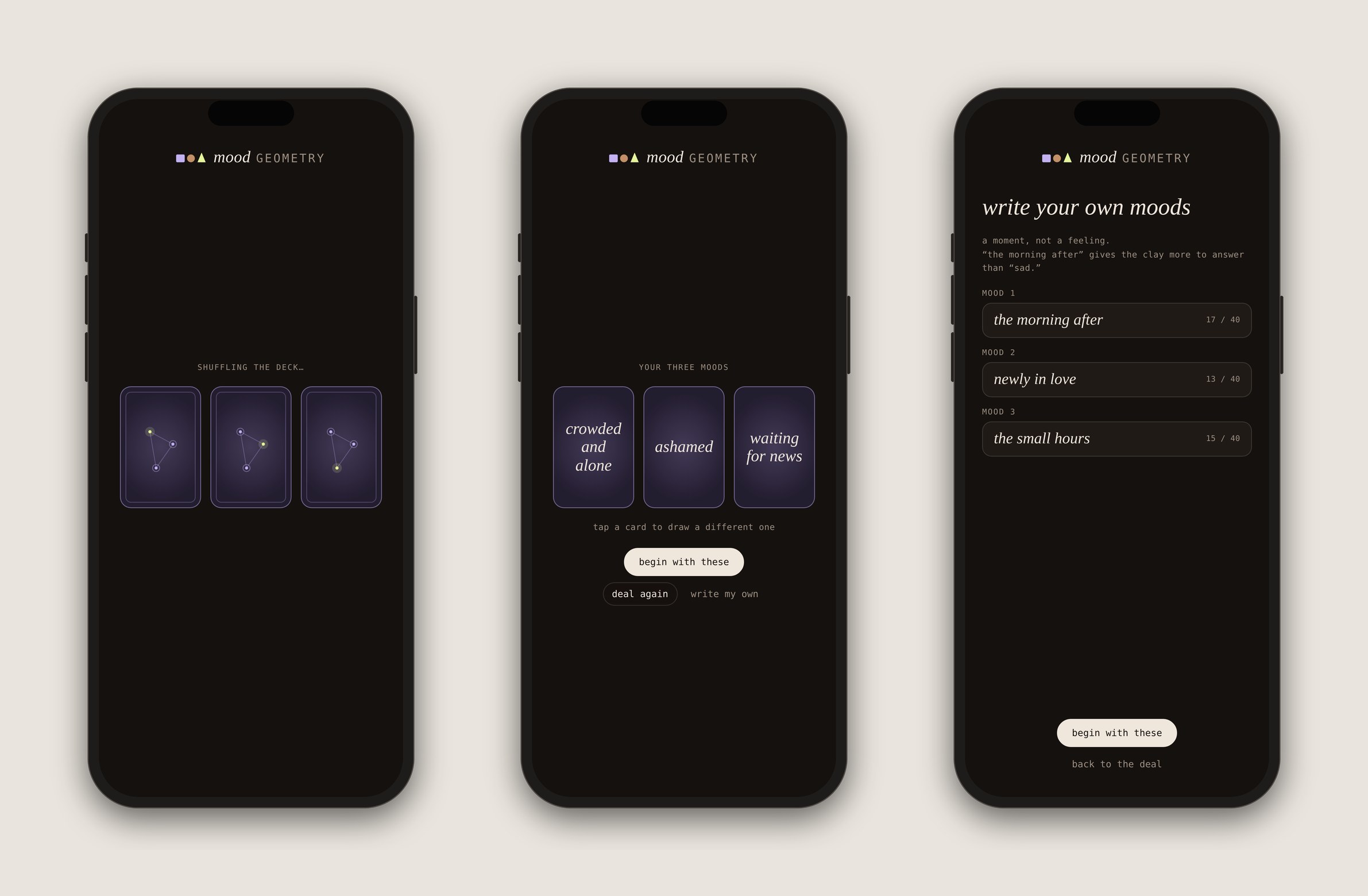
- Deal. Three cards turn over, each a mood. You can redraw one or write your own.
- Choose. Pick a starting form for each mood.
- Shape. Five verbs: melt, swell, wring, smear, erode. Drag on the form to apply them.
- Surface. Clay, satin, glaze, metal, glass or ghost.
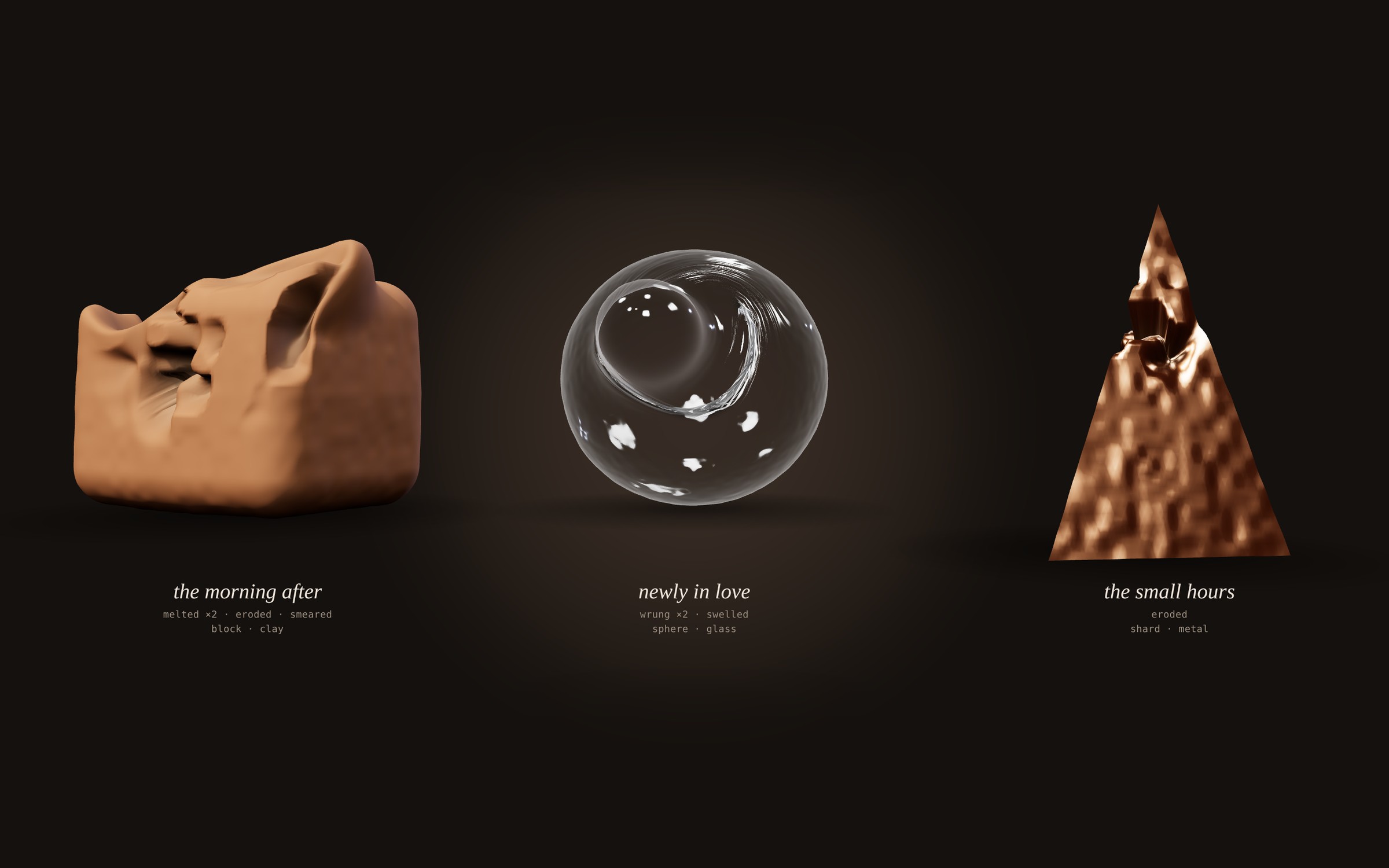
- See all three. The forms stand together under one shared light: soft, studio or low.
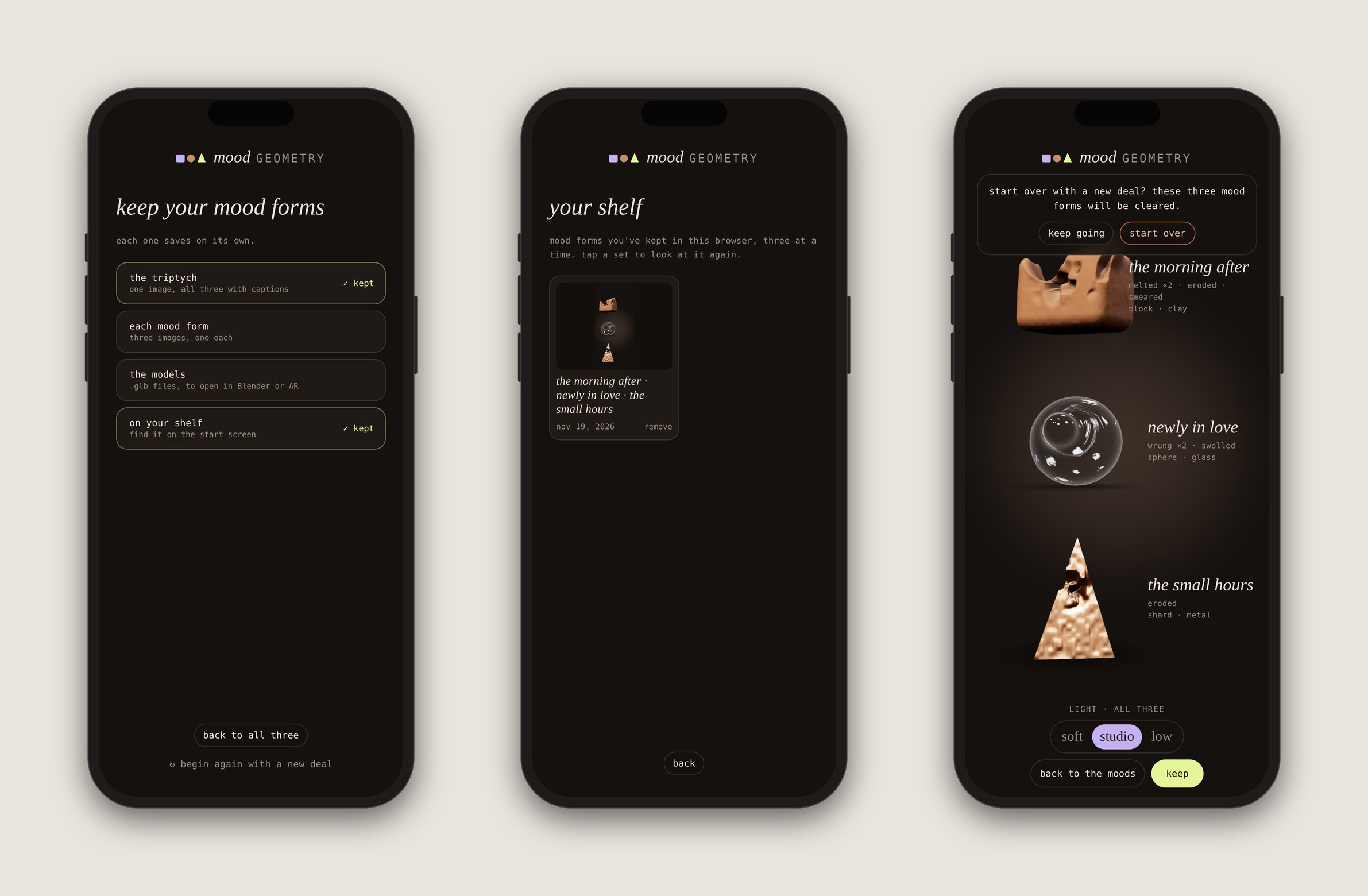
- Keep. Save the triptych or each piece as an image, download the models, place them in the room in AR, or add the set to your shelf.
Key decisions
- Nothing can be undone. Each stroke stays. The form becomes a record of how you got there rather than a perfected object, which keeps the focus on attention instead of polish.
- The record becomes the caption. Each form is labeled with its mood, its surface and the verbs used on it, so the triptych explains itself without a written reflection.
- One light for all three. Light is set once for the whole set, so the forms read as a group and can be compared honestly.
- Few, plain controls. A single segmented bar for verbs and one for surfaces, centered near the thumb. I cut options that asked for decisions the moment didn't need, including a wax surface and a free mode with no moods.
- Private by default. Work is saved in the browser, not on a server. Visits are counted without cookies or personal data, step by step, so I can see where people stop.

Keeping
A shelf holds past sets, three at a time, so you can come back to earlier moods and see them again. Forms can also be placed in the room around you in AR, scaled to sit on a table.
Credits
Concept, design and direction: Claudia Miranda.
Code: written with Claude, an AI coding assistant, under my direction.
Built with three.js and model-viewer.


